Recent activities in this game
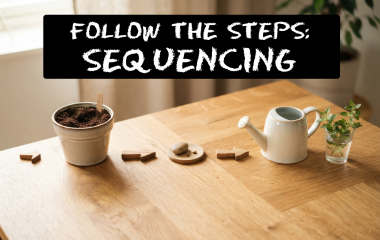
Can you help put these everyday tasks in the right order? Practice thinking step by step and discover what an algorithm really is!
Instructions for Programming: Order the Instructions
This game introduces the core programming concept of sequencing—the idea that the steps in an algorithm must happen in a precise order to reach a goal. Students practice logical thinking by arranging familiar everyday actions, such as brushing teeth or planting a seed, into their correct sequence. Use the game as a starting point for discussion: ask students why order matters, and what would go wrong if the steps were swapped. This helps build a foundation for later programming and computational thinking skills, showing that even simple daily routines follow a logical, step-by-step structure just like computer instructions do.
1. Sort the Steps in Order (3 misses allowed)
 Put in Order - The level contains 20 questions, but a maximum of 3 questions are practiced per game round. The player's task is to drag the pieces to their correct places in the order. The student has 3 hearts, giving them another chance at missed questions during a game round. There is no time limit. When the student has ordered all the pieces correctly, the round is completed. If it is too difficult, you can click the Give up button – then the correct order is shown – and the player can try to complete the level again.
2. Sort the Steps in Order (No misses allowed)
Put in Order - The level contains 20 questions, but a maximum of 3 questions are practiced per game round. The player's task is to drag the pieces to their correct places in the order. The student only has one attempt per question. There is no time limit. When the student has ordered all the pieces correctly, the round is completed. If it is too difficult, you can click the Give up button – then the correct order is shown – and the player can try to complete the level again.3. Sort More Steps in Order (Longer sequences, 3 misses allowed)
Put in Order - The level contains 15 questions, but a maximum of 3 questions are practiced per game round. The player's task is to drag the pieces to their correct places in the order. The student has 3 hearts, giving them another chance at missed questions during a game round. There is no time limit. When the student has ordered all the pieces correctly, the round is completed. If it is too difficult, you can click the Give up button – then the correct order is shown – and the player can try to complete the level again.4. Sort More Steps in Order (Longer sequences, No misses allowed)
Put in Order - The level contains 15 questions, but a maximum of 3 questions are practiced per game round. The player's task is to drag the pieces to their correct places in the order. The student only has one attempt per question. There is no time limit. When the student has ordered all the pieces correctly, the round is completed. If it is too difficult, you can click the Give up button – then the correct order is shown – and the player can try to complete the level again.Calculation of knowledge points and medals
- Bronze medal: after completing 2 rounds.
- Silver medal: after completing 5 rounds.
- Gold medal: after completing 10 rounds.